Taiwan's Democracy More Than Just a Geopolitical Asset in Western Eyes
By Kao Si-an, The Storm Media Opinion, August 13, 2026
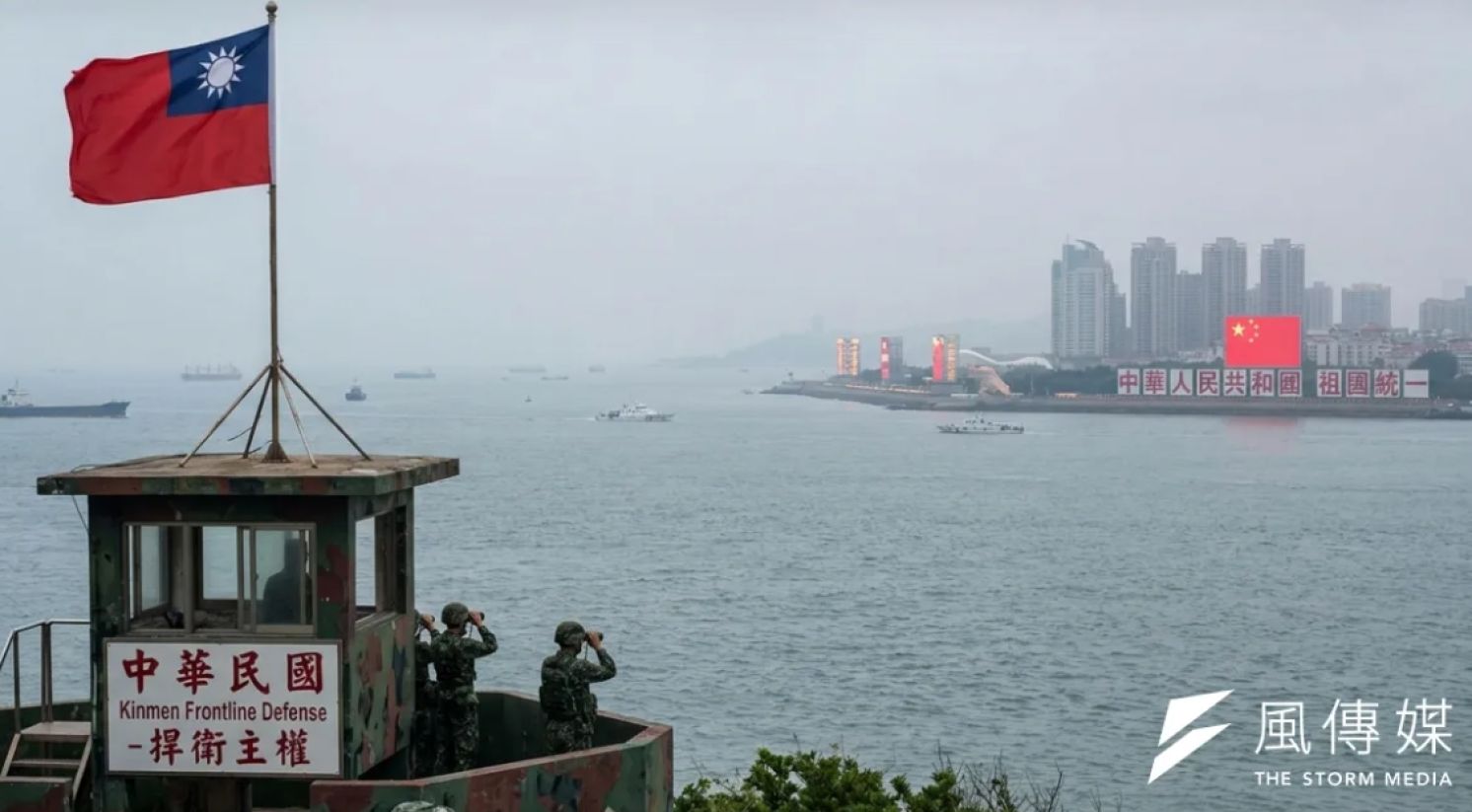
Recently, The Economist described Taiwan’s current political predicament as “freedom being betrayed from within.” At first glance, this appears to reflect concern for Taiwan. In reality, however, it once again exposes the habitual way the West comments on Taiwan: viewing Taiwan, which lives within the historical context of East Asia, from the strategic maps of Washington and London.
The most debatable aspect of the article is its definition of “Taiwanese democracy” as a “deterrence asset” against the mainland. Because Taiwan is democratic, Beijing would have to face resistance, a talent exodus, and international condemnation after taking control, meaning democracy could raise the cost of unification. On the surface, this argument strongly affirms Taiwan, but at its core, it remains a typical example of Western instrumental rationality: the value of Taiwan’s democracy apparently lies in the fact that it makes it more difficult for Beijing to take control of Taiwan.
After more than three decades of democratization, is the meaning of Taiwan’s democracy ultimately reduced to a line item called “political deterrence” on the balance sheet of U.S.-China strategic competition?
Even more paradoxically, while The Economist praises Taiwan’s democracy on the one hand, it also appears highly impatient with the conflicts that naturally arise from democratic politics. Legislative budget cuts and freezes, disputes between the ruling and opposition parties over arms purchases, and partisan obstruction of personnel appointments are linked together as evidence of “betraying freedom from within.” Following this logic, democracy seems to qualify as a “mature democracy” only when it successfully passes arms purchases, supports defense policies, and meets Western expectations for an Indo-Pacific strategy.
Yet when the United States shuts down or Congress obstructs budget legislation, these actions can be described as checks and balances; when French politics reaches an impasse, it can be interpreted as democratic political realignment; but when political conflict occurs in Taiwan’s legislature, it may instead become a case of “China benefiting.” If this is not a double standard, then what is?
What is truly concerning is that this type of discourse is gradually “securitizing” Taiwan’s politics: opposition to defense spending may be interpreted as weakening deterrence, advocating improved cross-Strait relations may invite suspicion of being pro-China, and public fatigue with politics may be attributed to mainland Chinese information warfare. In the end, all of Taiwan’s domestic problems are forced into the one familiar Western drawer labeled “democracy versus authoritarianism.”
The problem is that Taiwan’s people do not live inside The Economist’s editorials. As Taiwan has entered the ranks of mature economies, people are increasingly concerned with whether the health insurance system can be sustained, whether their jobs are secure, whether they can afford to buy a home, and whether they will have adequate retirement security.
Therefore, young Taiwanese disappointment with politics cannot all be attributed to Beijing’s cognitive warfare; nor can calls from some on both sides of the Taiwan Strait to reduce hostility be directly interpreted as a decline in democratic will. Translating complex concerns about people’s livelihoods into geopolitical issues is precisely the biggest blind spot in Western elites’ commentary on Taiwan.
The Economist sees “Divide and be conquered,” but does not ask why Taiwan is divided; it sees young people’s political apathy but does not truly understand why they are disappointed; it sees legislative obstruction of arms purchases but pays less attention to whether citizens in a democratic society naturally have the right to demand cost-effectiveness, procedural legitimacy, and appropriate fiscal priorities in arms procurement.
And so the greatest irony emerges: the West demands that Taiwan defend democracy while simultaneously hoping that Taiwan’s democracy will not interfere with Western strategic balancing. But if democracy is worthy of affirmation only when it serves a particular geopolitical strategy, then it is not democracy, but merely a more civilized form of strategic obedience.
Taiwan must certainly remain vigilant against Beijing’s military pressure and influence operations. At the same time, however, it should also be wary of the multiple-choice questions that the West has preemptively set for Taiwan. Taiwan’s agency does not mean choosing one of two exam graders, Beijing or Washington. Rather, Taiwan has the right to decide for itself what is worth defending, what risks it is willing to bear, and whether cross-Strait relations should ultimately move toward confrontation, competition, or peaceful coexistence.
The author is an adjunct university instructor.